One of my favorite customs as a missionary was to sit down after a hard day's work and talk about movies with all the missionaries in the apartment. But it's not what you think! The best part about our conversations is that we were able to make connections to the gospel. Obviously, some movies were easier to make that connection than most. Hands down, my favorite movies to make this connection have been
The Lord of the Rings trilogy. They are clearly some of the most incredible films ever made and have such brilliant connections to the gospel. I will try my best in this post to summarize what we talked about as missionaries. Since there are multiple connections to certain characters, I will take each aspect of the films and discuss them separately. Also, since there are so many aspects to the gospel in the films, I will do it in separate intervals.
The Ring

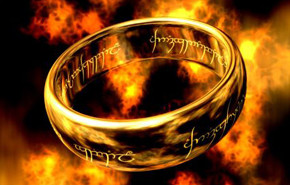
The One Ring is very clearly sin. We see all throughout the history of the movies that it corrupts everyone
who comes in contact with it. We see that everyone desires it so much that they are willing to kill to get it. It also becomes extremely tempting to put on when the Black Riders are around, similar to when you are in a sinful environment, it becomes very tempting to sin. The Ring can also only be destroyed in fires of Mount Doom, similar to the fact that the only way that we can be rid of sin is to forsake and destroy it. As is seen the third film of the series, it is not very easy, but the burden leaves once it is done.
Sauron
Sauron is a very clear representation of Satan.
He is a man who craved power and gave men rings of power and eventually corrupting them, just as Satan does to the hearts of men today. The connection between Sauron and the ring is interesting. Sauron's whole existence hinges on the power of the ring. If it is destroyed, so is he. Similarly, Satan only has as much power as we give him. However, when we allow sin to take over us, he has almost limitless power over us unless we repent. It is also interesting to note that Sauron covered the land in darkness, similar to what the scriptures say that Satan will do.
Frodo Baggins
Frodo is certainly one of
more interesting characters in the story because he fits so many people in the scriptures. First of all, he is one of several characters who could be considered a similarity to Christ. Like Christ, Frodo was the only one to be able to resist the ring long enough to destroy it. Christ was the only who was able to take upon Himself the sins of the world. Jesus and Frodo mention several times throughout their stories that the burden they carry is extremely heavy. Frodo's destroying of the ring ultimately helps the armies of Man overcome Sauron, similar to Christ's victory giving us the strength to overcome sin. Frodo can also be be a representative of mankind in general. It shows that even the best people are corruptible by sin, but anyone can be purged of sin through repentance. It also shows that the longer we hang onto sin, the worse it gets, similar to the fact that Frodo's burden gets heavier the longer he carries the ring.
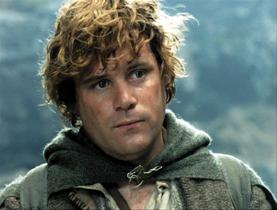
Samwise Gamgee
To me, Sam is a pretty accurate representation of Peter. Both are fiercely loyal to the men they followed, to the point of impetuousness at times. Peter also wanted to go where Christ went, but was unable to. Similarly, Sam wanted to help Frodo carry his burden, but was not the one called to do so. It is interesting to note that both Peter and Sam defend their masters with their swords, even though it was unnecessary to do so. Sam could also be seen as the angel that appears to Christ in the Garden of Gethsemane. Sam always provided the necessary strength to Frodo to help him carry on. He even literally carried Frodo when he lost strength near the end, similar to the angel lending strength to Christ in the Garden during the worst of His sufferings.
Meriadoc Brandybuck and Peregrin Took
Merry and Pippin are clearly representative of two of the disciples of Christ, though it is hard to pinpoint exactly who. I would like to think of them as James and John since an allegory of Peter has been addressed and it seems fitting to include them, since they are also precious Apostles to Christ. It's also interesting to the note the spontaneous manner that these two joined the journey, similar to how Christ asked the Apostles to follow Him and they followed without question. In addition, these two had their own victories, similar to the Apostles having their many separate journeys after the death and resurrection of Christ.
 The One Ring is very clearly sin. We see all throughout the history of the movies that it corrupts everyone who comes in contact with it. We see that everyone desires it so much that they are willing to kill to get it. It also becomes extremely tempting to put on when the Black Riders are around, similar to when you are in a sinful environment, it becomes very tempting to sin. The Ring can also only be destroyed in fires of Mount Doom, similar to the fact that the only way that we can be rid of sin is to forsake and destroy it. As is seen the third film of the series, it is not very easy, but the burden leaves once it is done.